
Good Type

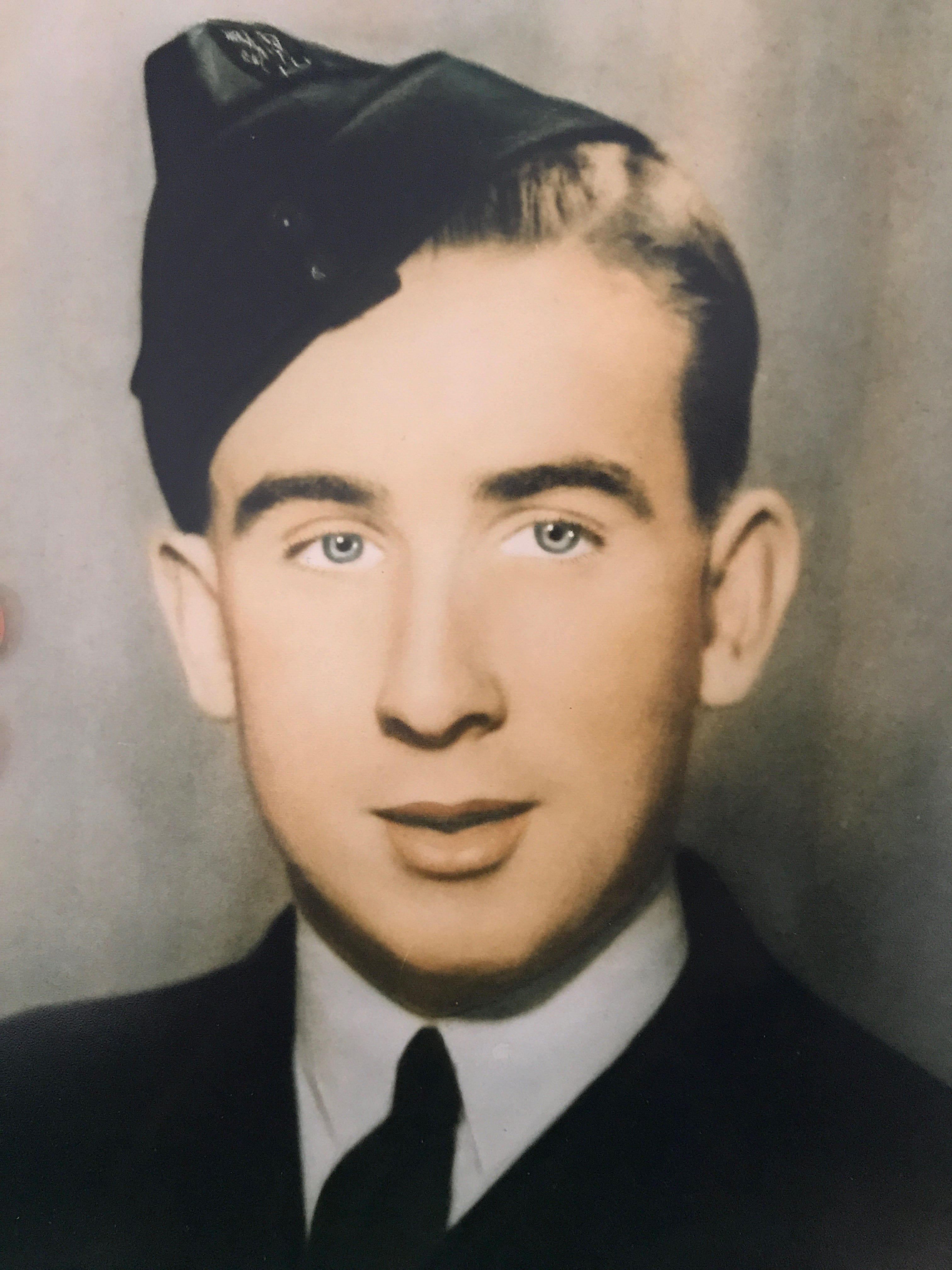
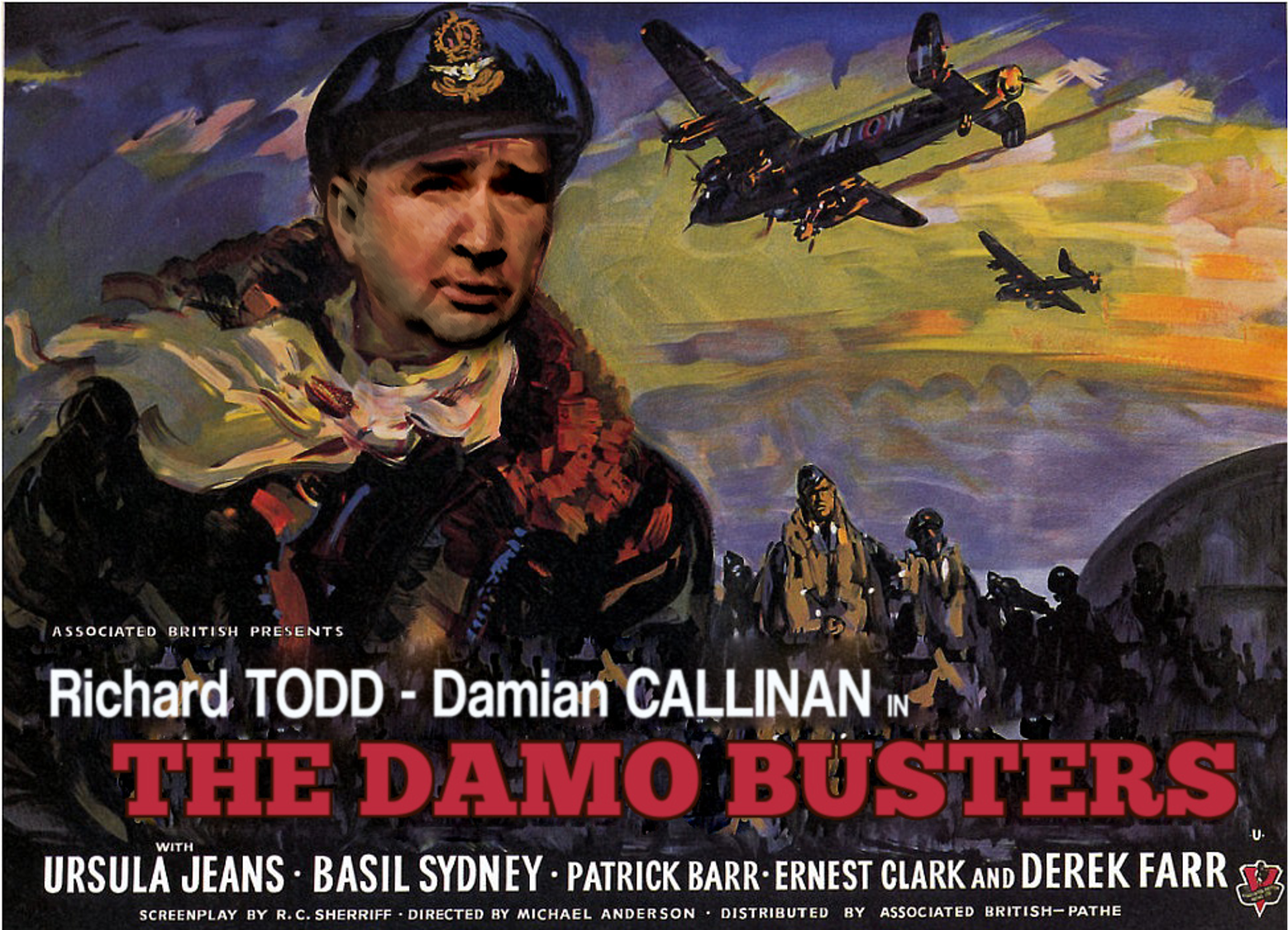
(Leading Aircraftman Adrian Callinan 116548, possibly on his first day of service)
The day my dad turned 18 in 1942, he finished up his teacher training course at Yarraville West State School and joined the air force to serve his country in WW2.
The day I turned 18 in 1982, I lay on the ground at the Bright Golf Course with a ball in my mouth pretending to be a tee, while my mates lined up with their drivers.
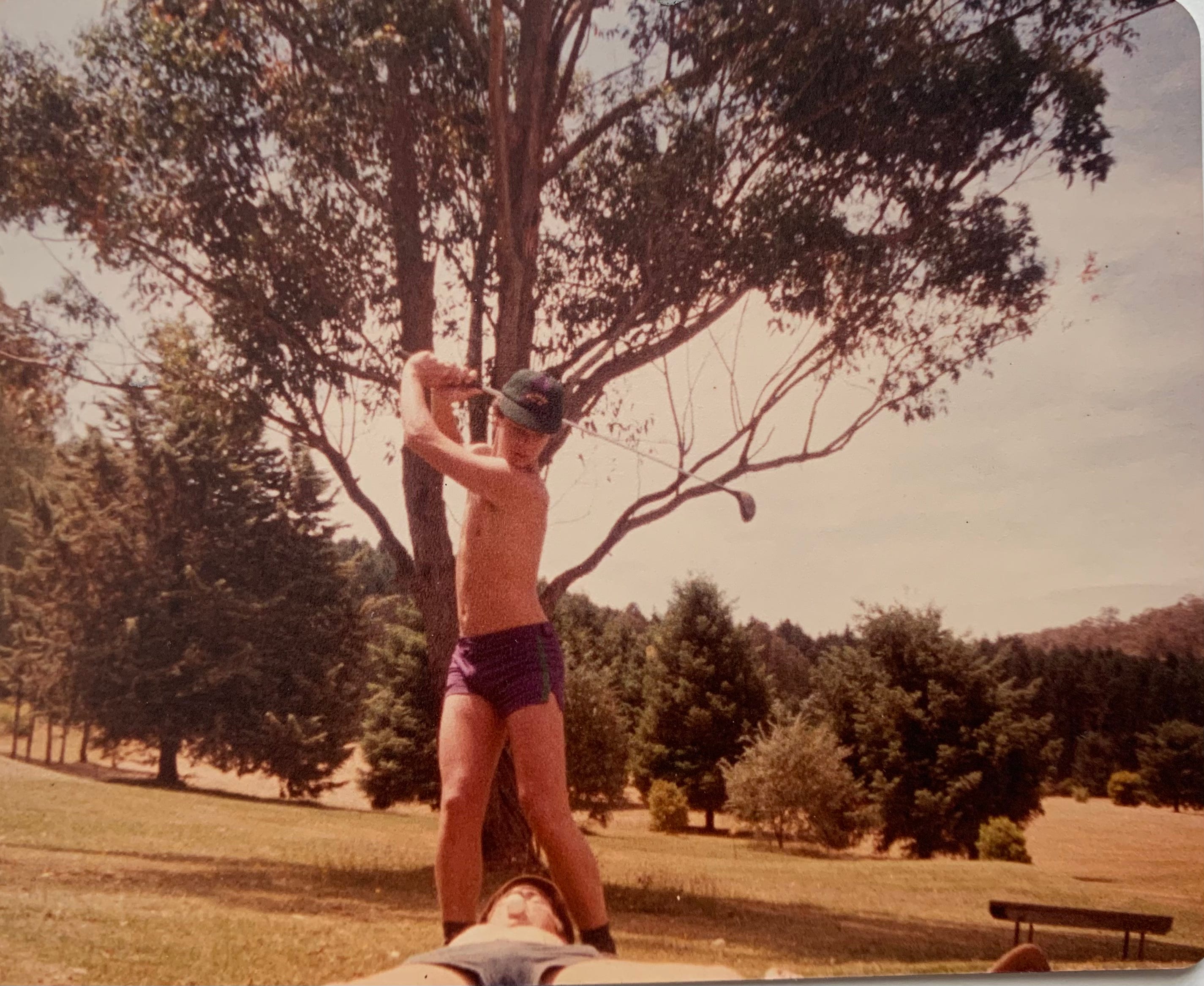
(Leading Idiot, Damian Callinan, possibly on his first day of schoolies. )
I moved to Yarraville a couple of years ago. Just after moving in, my brother Paul & I were wandering the streets and he pointed out that dad was briefly a trainee teacher here. He’d been assigned to Yarraville West after finishing his schooling at Parade College, counting the days until he was old enough to serve. I’d always known dad had enlisted, but it wasn’t until then that I realised that he had literally joined up on the first day possible.
My interest was piqued on a recent trip to Far North Queensland, where dad was first posted. As I stood under the Big Peanut in Tolga, only a few kilometres from where he was stationed at the 220 Radar Station up on Bones Knob, I tried to visualise the jarring experience of leaving his family home in Brunswick East and being deposited in the Atherton Tablelands, which at the time was host to one of the biggest military concentrations in the Pacific Theatre. 100,000 personnel were stationed here between 1942 - 1945, as the area was seen as the ideal training ground for Australian & US troops to undergo jungle warfare training.
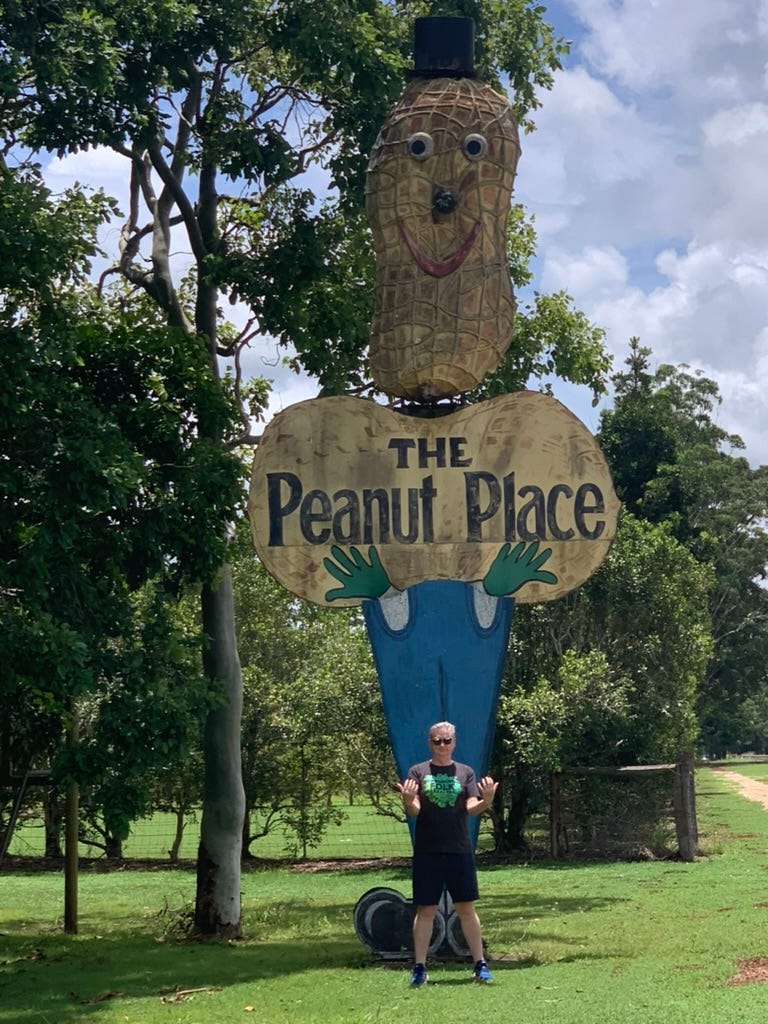
( The author poses in front of the Big Peanut as so many US & Australian Service Personnel did before him)
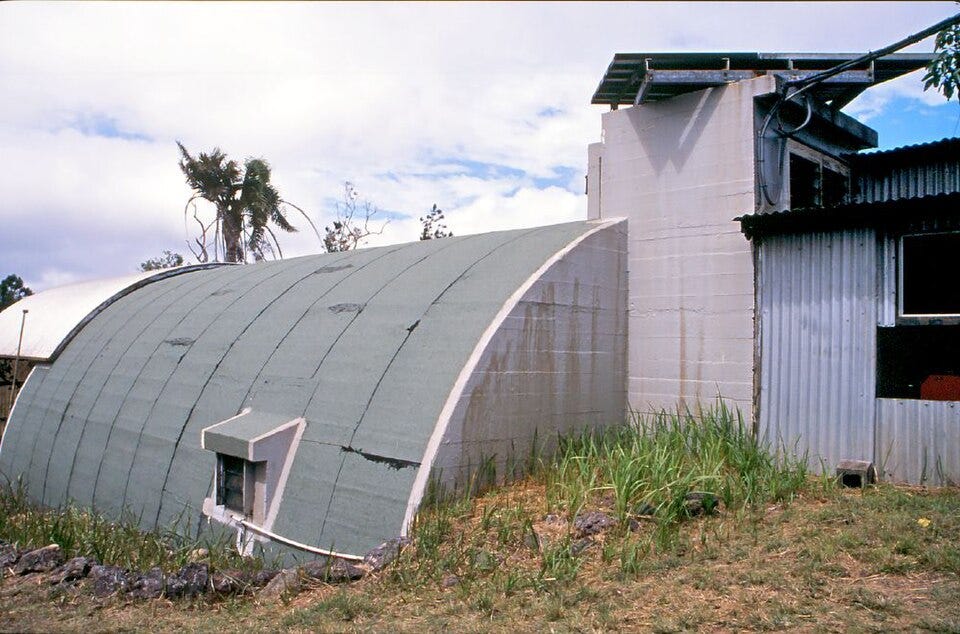
After finishing his training, a fresh faced, Leading Aircraftman Adrian Callinan, would have alighted the train at Atherton Station to see US B52 bomber crews on furlough from Mareeba Air Base; Diggers from the 2/33rd battalion being refitted & retrained after their first pacific campaigns at Ioribaiwa, Myola & Gona; Australian officers from the 6th through 9th division, flitting in and of their adopted HQ at the Barron Valley Hotel, but most likely having his eye turned by off duty nurses from the Rocky Creek Australian Military Hospital. At the time, it was the largest in the southern hemisphere and specialised in treating malaria and other tropical diseases, It was also home to a large recreation area for all forces. The restored ‘Igloo’ event hall can be visited, and indeed booked for weddings today. In the war years, Dad undoubtedly watched hit movies there, like ‘Casablanca’ & ‘Holiday Inn’ & …
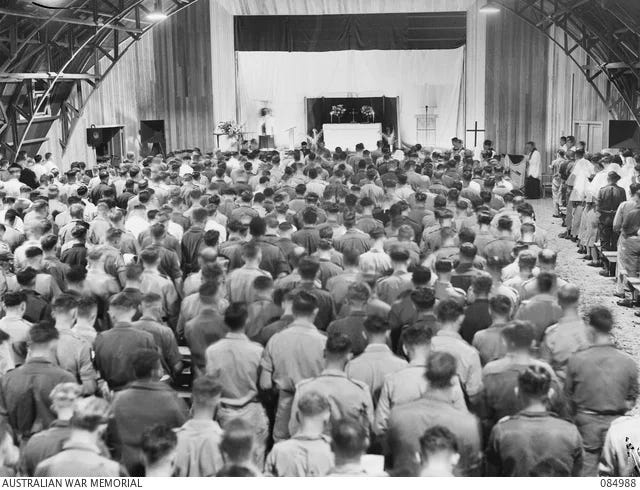
(Mass being celebrated at the Rocky Creek Igloo. Based on later form, Dad would probably have done one of the readings and or passed around the collection plate.)
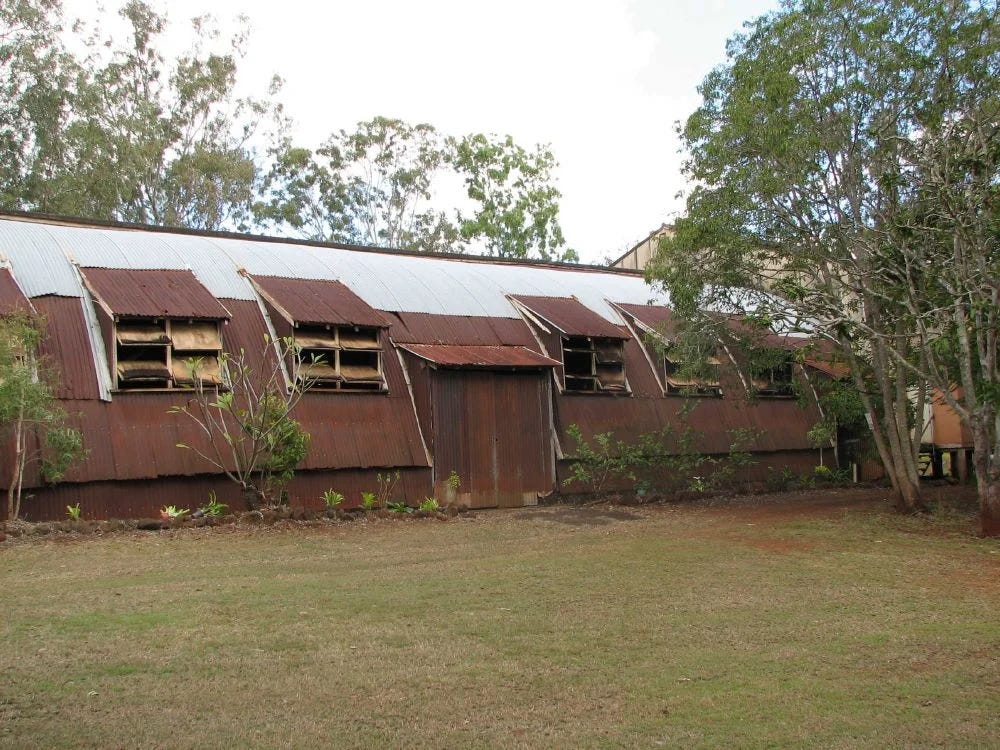
(The Igloo beforre it’s restoration)
I know only a few anecdotal titbits from dad’s service. I knew that he had tried to join as a pilot, but an inner ear problem was discovered during his medical and he was reassigned to RAAF crew; he slept at the commandeered MCG on the night of his induction and he was wounded in action, but given he couldn’t change as much as light bulb in civilian life, it was a wonder he wasn’t electrocuted more often.
Most of his stories related to the fact that as well as joining the RAAF at age 18, he had also taken the Catholic Pledge of alcoholic abstinence until he turned 21. This led to him being immensely popular with his unit once a week, when his ration was redistributed. By the time he turned 21, his unit had been redeployed to Darwin and his mates made sure he made up for lost time. He duly brought up his ration on Mindil Beach.
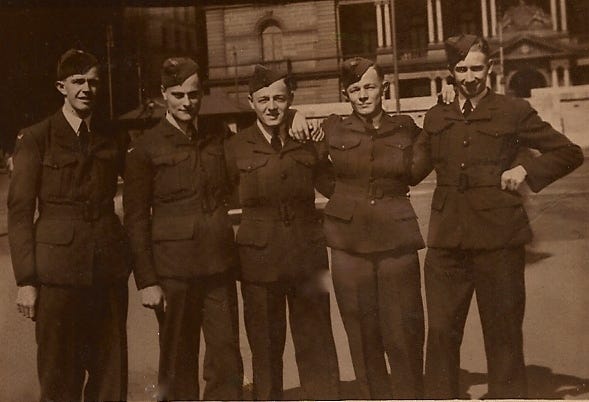
(Adrian, far right, with some the beneficiaries of his Catholic Pledge of abstinence)
I’ve been on many trips to FNQ in the past, for work and leisure, but it’s the first time that I noticed just how much the area was part of the Pacific War. A tribute to a US Bomber crew killed in heavy fog at Babinda; informative historical displays about joint US/Australian training maneuvers on Trinity Beach; headstones amongst the gum trees at Rocky Creek Military Cemetery and a list of the 160 units stationed in the area at the Tolga Museum.
An invasion of Australia seemed imminent in 1942. Though later debunked by a Royal Commission as a political myth, ‘The Brisbane Line’ theory was widely believed to be the official policy of the Australian Chiefs of Staff. In a rumour perpetuated by General McCarthur himself, it was widely believed that in the face of Japanese invasion, the defence plan was to give up northern Australia and concentrate allied defences between Melbourne and Brisbane. 18 year old Adrian didn’t have the hindsight of history to know that where was going would ultimately turn out to be a relatively safe posting. He also wasn’t to know that by the time he was later posted to Darwin, there would be no more bombings.
As I squeezed the Bowen Mangos to assess the right level of give at Mr Humpy in Tolga, it was clear that this environment was light years away from the world that my still teenage dad experienced. I longed to be able to ask him questions, but of course, I couldn’t. That font of knowledge and memory went with him.
Without much confidence I went to the Australian War Memorial site in the hope of finding more information. In years gone by, the basic facts & figures of those who served was available, but for unknown reasons they had been taken down. However, this time I discovered a link to the National Australian Archives and there, I struck gold.
Once I typed in his name and service number, a file appeared containing every official photo or document relating to his service. The photos, presumably taken on the day of his enlistment, had probably not even been seen by dad himself. They’re a treasure!
In the first he is in his civvies and it looks more like an arrest photo. His countenance suggests he doesn’t know why he’s been detained, but he knows it can’t be good.
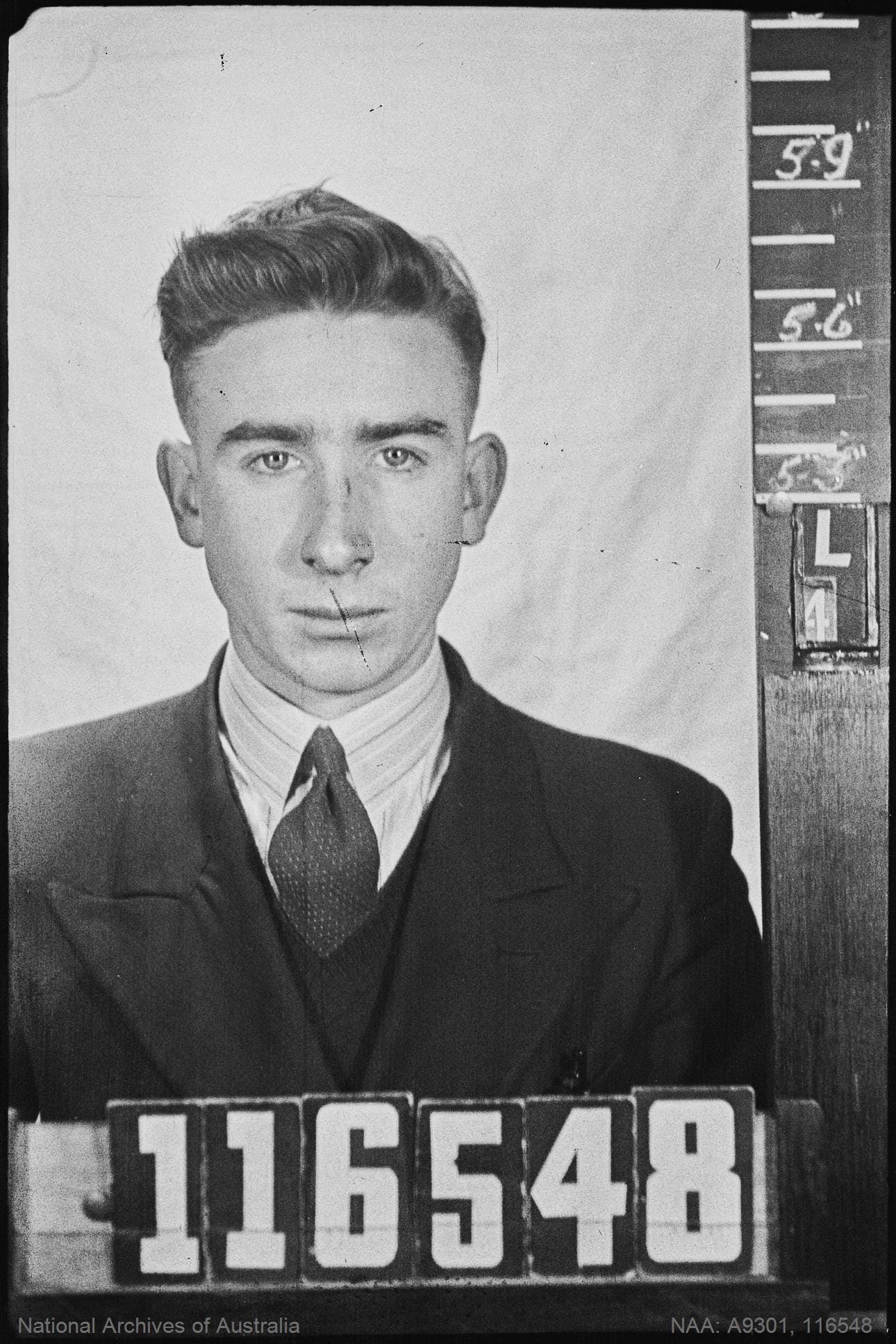
( Before )
He is sporting his crisp new uniform in the second, and he looks proudly assured, like he’s relieved that he is finally doing his bit.
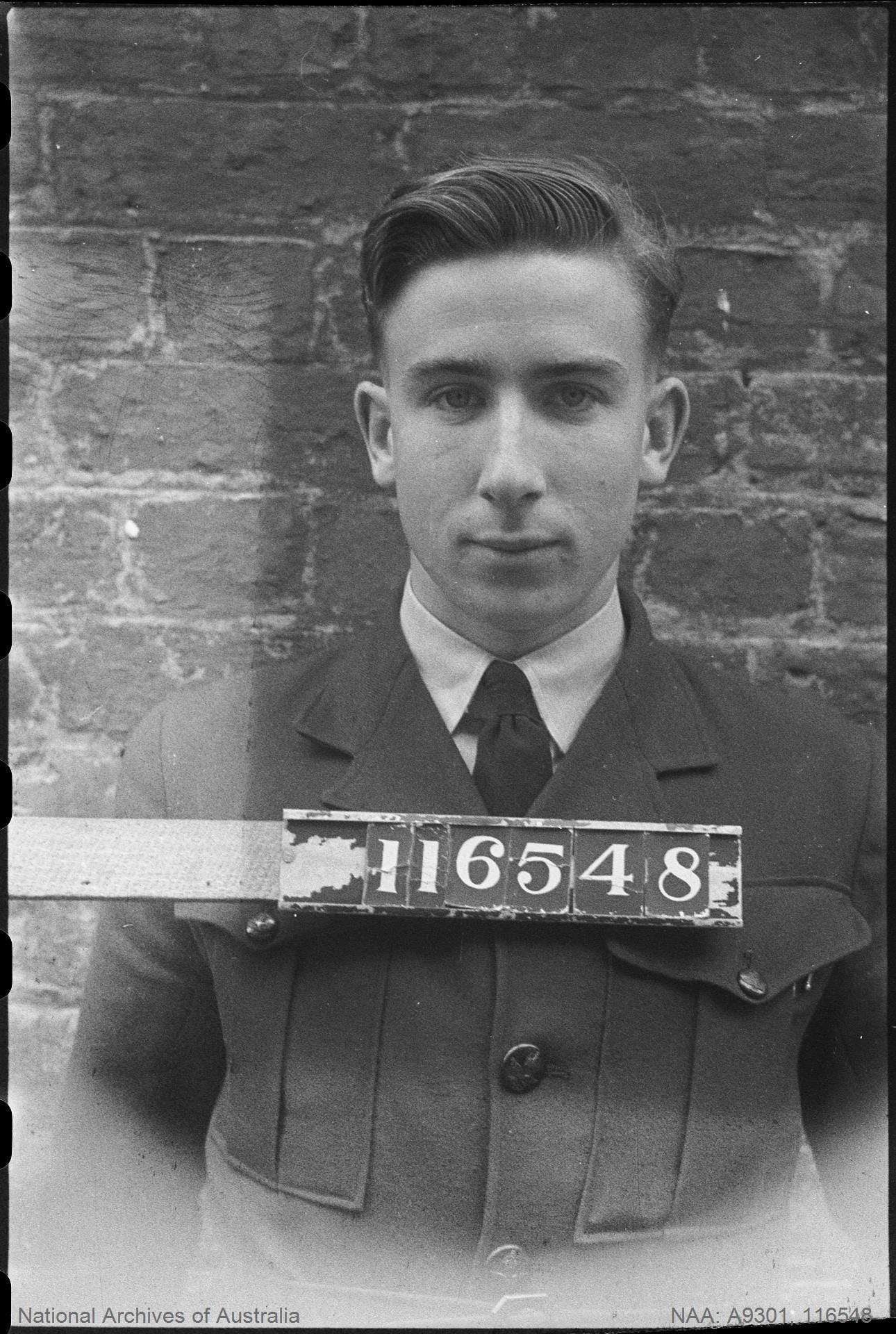
(After)
Clicking through the documents felt like looking through clues to a true crime escape room. They are quite meticulous in the detail of the bookends of his service: enlistment and demobilisation. However, the details of his time serving are scant.
From the enlistment documents I gleaned …
He was described as a ‘Good Type’ & ‘Suitable for radar mechanic training’, on his medical certificate.
He received fair to average marks across the board on the RAAF Aptitude Test.
As was still the norm in 1942, he listed his nationality as British rather than Australian.
The RAAF conducted a police check at Brunswick East Police Station, where he was found to have no criminal record. The responding officer wrote ‘No personal knowledge, but from enquiries made his character is that of a sober, honest and respectable man’.
On July 16th, 1942, he took the oath swearing allegiance to God, King & Country.
On July 22nd, 1942, he received correspondence asking him to report for duty at the RAAF Recruiting Office No 1, Russell St. Melbourne on July 31st.
On July 31st, 1942 he began his life as Leading Aircraftman Class 1 - Adrian Callinan 116548, on a daily wage of 6 shillings.
Through his training phase, he was first sent to the Royal Australian Air Force No. 5 Recruit Depot in Rocklands in the Southern Grampians in Victoria; followed by a stint No. 1 Flying Training School at Point Cook, Victoria & finally to No. 1 Radio Training School in Richmond, NSW.
Just over a year after he enlisted, he arrived for duty at the 220 Radar Station in Tolga, Queensland on July 7th, 1943.
(What remains of the heritage listed 220 Radar at Bones Knob).
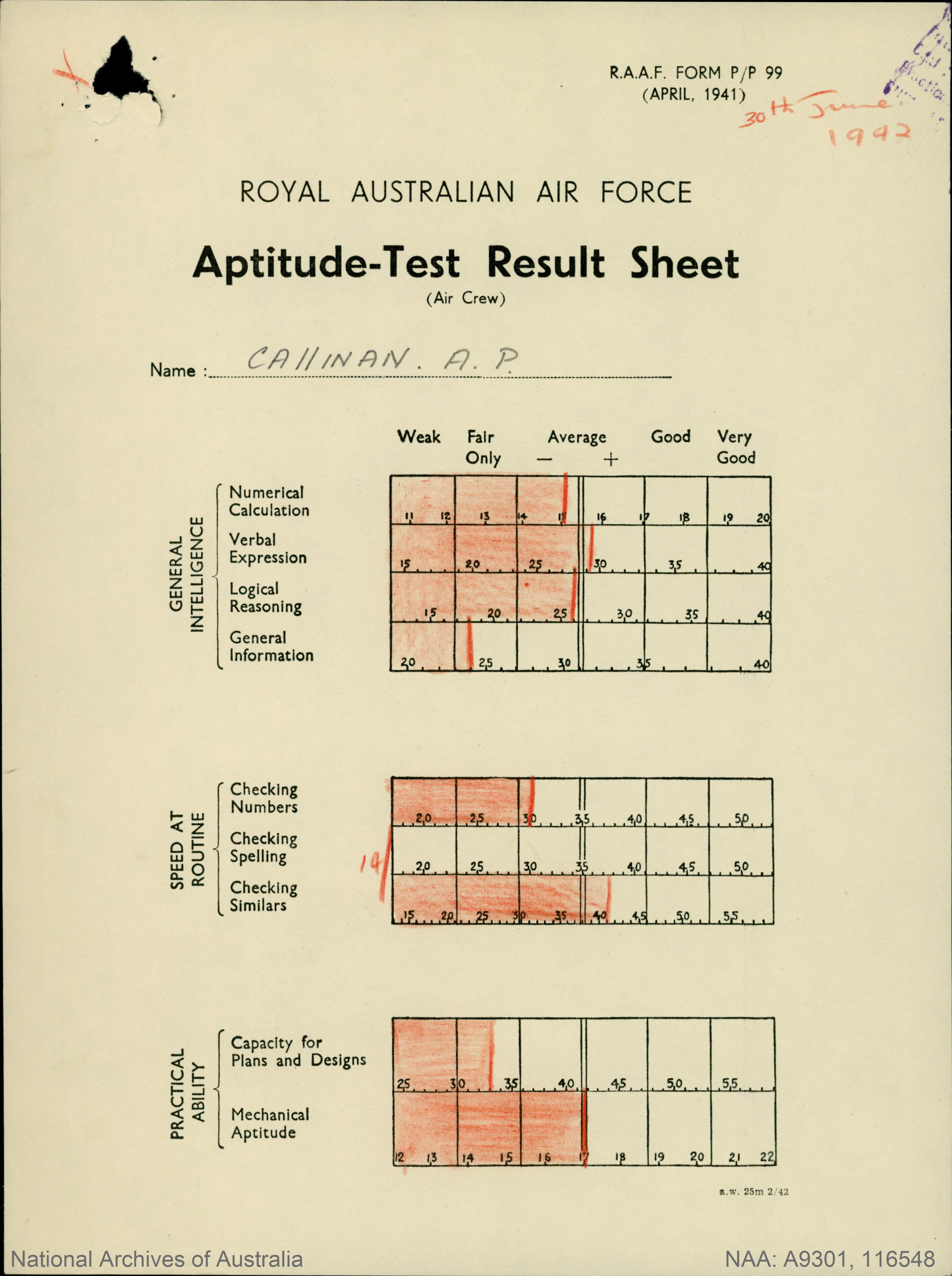
(He’d have hated the score he got for General Information & what went on with his spelling during ‘Speed at Routine’? and what is ‘Speed at Routine’?).
As I mentioned it’s hard to glean much from his actual service period, but here are some tidbits
His RAAF Conduct Sheet was row after row stamped ‘Certified No Entry’, suggesting that his abstinence helped him be a very good boy.
He was granted ‘Tropical Leave in Lieu’ on September 23rd, 1944. It’s not clear if he was handed a Hawaiian shirt as he left the base.
There are more documents relating to his discharge than anything else, but they are repetitive. Below is a summary …
At the time of his discharge on September 15th, 1945, he was stationed at ADF HQ in Darwin. The reason given was ‘On demob’. He was granted ‘38 days pay granted in lieu of leave’. At the time of his demobilisation, he had no overdue library books and was not financially ‘in arrears’ with the canteen.
The photos we have of his time in the RAAF hint at a great sense of camaraderie. There’s copious evidence of skylarking & sport, but little evidence that the RAAF enforced a Sunsmart policy. Shirtless and full of confidence, he looks like he’s having the time of his life.
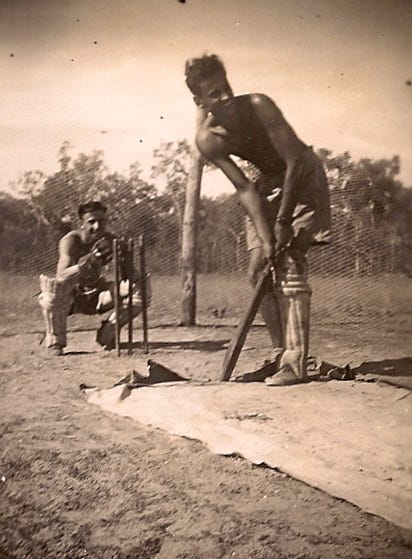
(Adrian is the wicketkeeper. A sporting discipline he passed on to the author … By the by, I’d bowl if I won the toss on that deck).
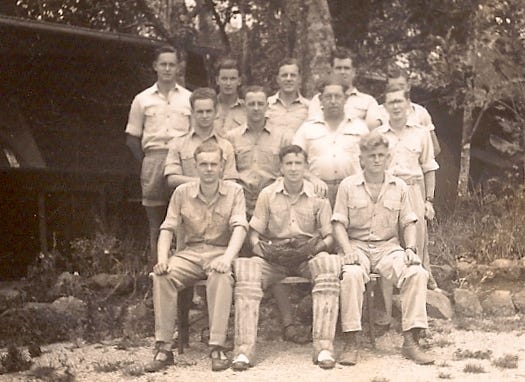
(Possibly a more formal cricket match given the addition of shirts, but I’m guessing it’s the first ever game for the guy in the font row wearing sandals).
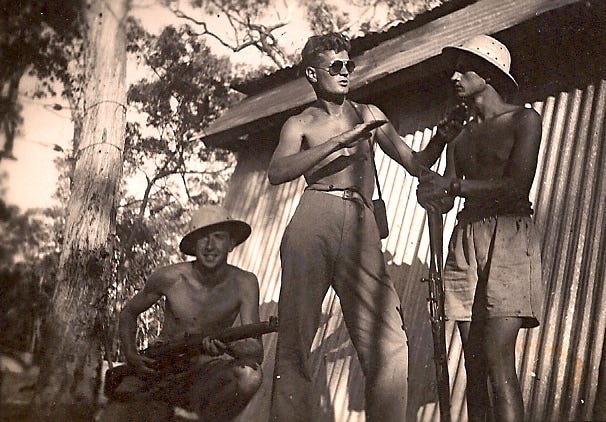
(Oh, how I would love to know what was going on here).
I’m the youngest, so probably the worst witness in this regard, but the main person I recall dad talking about was the unit chaplain, Fr Peter Carroll. For those who knew my dad and mum, this won’t come as a surprise. To their dying days they could give you a well-being & parish update on almost every Catholic Priest in the Melbourne Archdiocese. A priest at the Callinan dinner table was as ubiquitous as splades and a bottle of red.
In 1974, dad took much needed long service leave from his role as Principal at Greenwood High School. Mum, dad, my sister Michelle and I, squeezed into a sleeper cabin for the long train trip to Townsville.
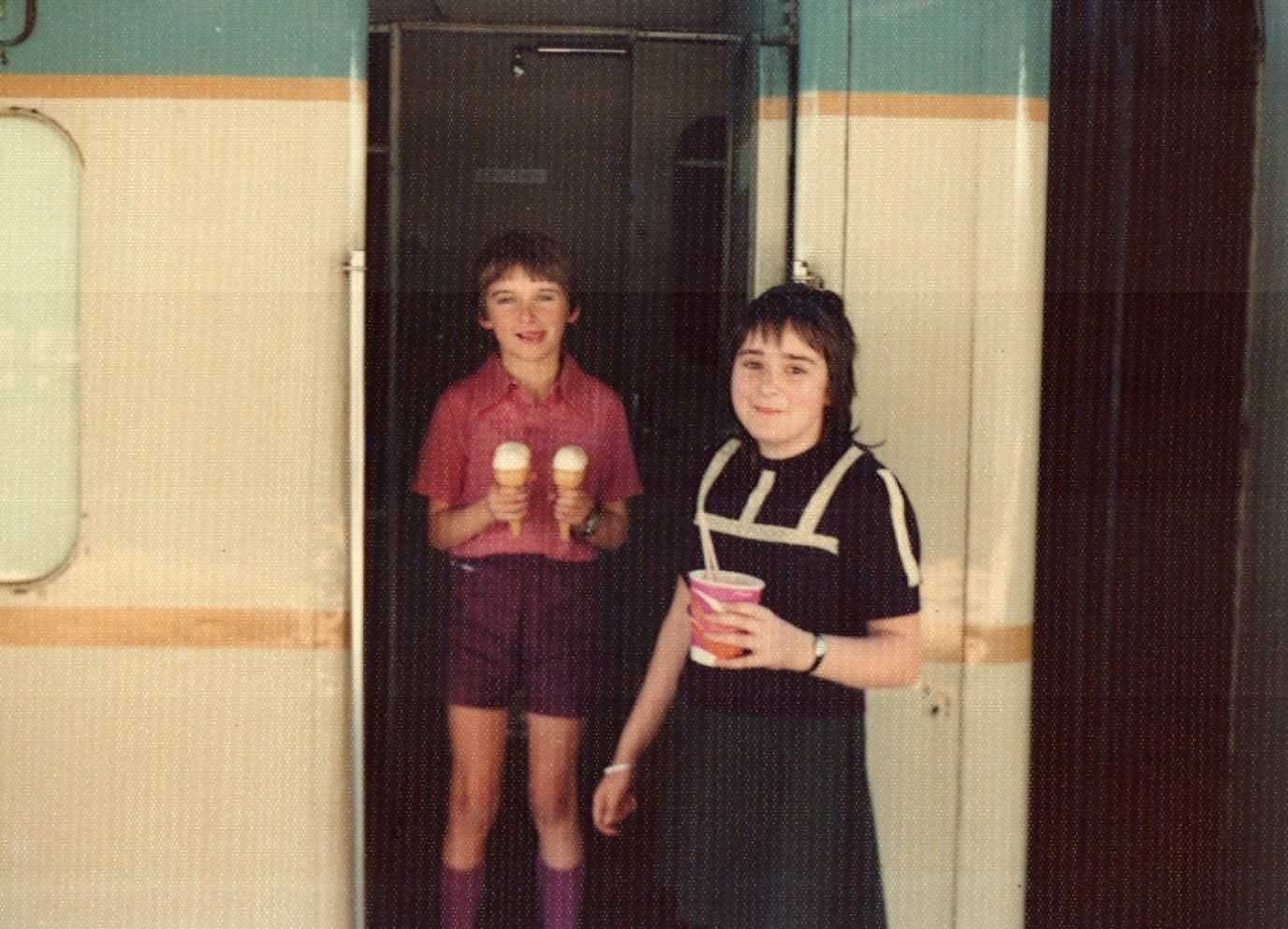
(Ice cream stop at Mackay Station)
We stayed with Dad’s sister, Aunty Joan and Uncle Kiernan (Dorney), himself a highly decorated medical officer in WW2, Korea & Vietnam. Whilst up there, we made a side visit to see Peter Carroll at his parish, St Patricks in Ingham. I could immediately see the attraction for dad. He was kind and playful. My enduring memory is being taken on a tour of the Ingham Cemetery. With one of the highest Italian populations per capita in Australia, the graveyard was more like a village with rows of huge, ornate mausoleums. Peter gleefully pointed out the most garish embellishments.
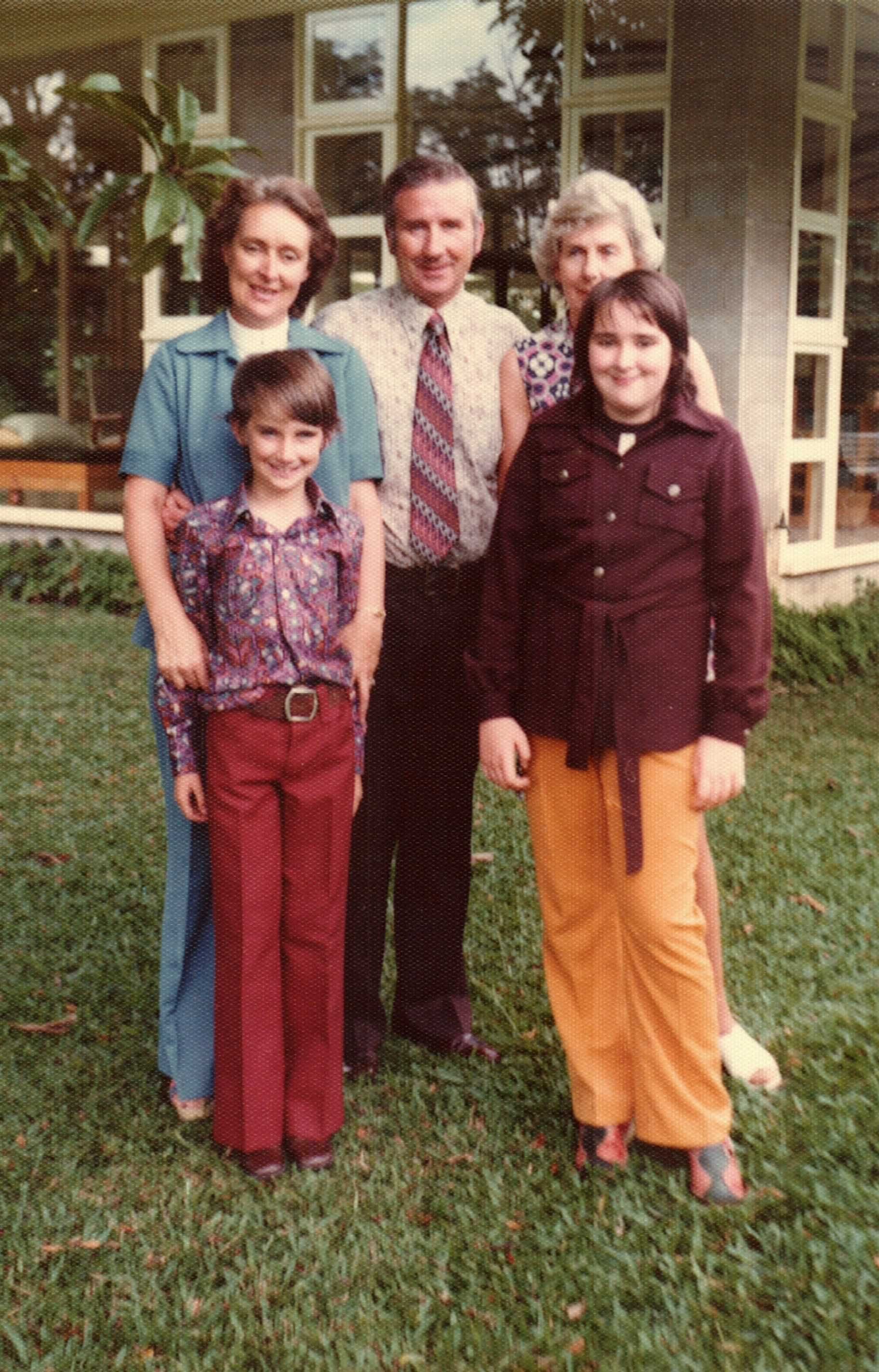
(Over dressed in Townsville with Aunty Joan)
Around the same time, I recall going up to Sydney for a 220 Radar Station reunion. We dropped dad off at an RSL Club in the suburbs and then picked him up later. He was well & truly past the period of the Catholic Pledge by then, and as we’d noted in Ingham, Fr Carroll was no tee-tollar, so that afternoon dad slept off the beers while Michelle & I played in the motel pool.
These are all pieces of a puzzle that will never be even close to completed, but I enjoy keeping my parent’s spirit alive by continuing to hunt for stray memories, unexpected trivia and flashes of heart. Locating his service documents was one such find, but finding mum’s diary that she wrote in 1946 was the best discovery of all. It’s the subject of my one man show, Double Feature. You can read about it here and listen to me chat to Richard Fidler on ABC Conversations here.
Fittingly, I’m going to give mum the last word in this story. This extract from her diary was written on the day that they met, not so long after dad had returned from service.
‘As we were walking down the hill, Pat Cullen thought she saw Jack (Cooper) & sure enough it was East Brunswick CYMS playing Ivanhoe. Tom (Duffy) & Jack were both playing. At half time, Jack & Tom came over & brought a friend with them. He’s been away with the RAAF, that’s why we haven’t met him previously. His name is Adrian Callinan. I was cold and he lent me his heavy air force jacket. On the tram home later that night Adrian sat next to me & had his arm along the back of the seat. We got out at the Merri Bridge & as Adrian lives on St Georges Rd, he came home with us.’
I’m glad he came home.
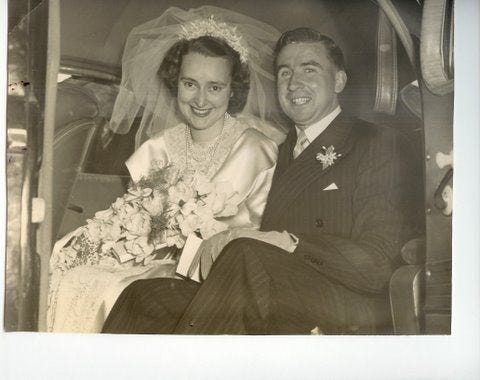
(Kathleen Purcell & Adrian Callinan married on December 26th, 1949 at Sacred Heart, Preston)
The Callinan genes run strong! Michelle could be Pippa in these photos. I'm also glad Adrian Callinan came home! I loved reading this Damian.
I love this! Beautifully written. Fantastic photos. ❤️
As self-appointed chief sleuth & custodian of my family's WWI & WWII service history, I know the joy of uncovering the precious puzzle pieces. I really appreciate the detail in the records. My gt-grandfather was a stretcher-bearer in France. In 1918 he was reprimanded for reportedly 'failing to salute an officer'. I'd love to know more. I like to think he was diligently carrying a stretcher. 🫡